ACP Cladding in the UAE: Costs, Fire Ratings & Civil Defence
A practical guide to aluminium composite panel cladding in the UAE — what PE, FR and A2 fire cores mean, the Civil Defence rules you must follow, fixing systems, finishes and real costs.
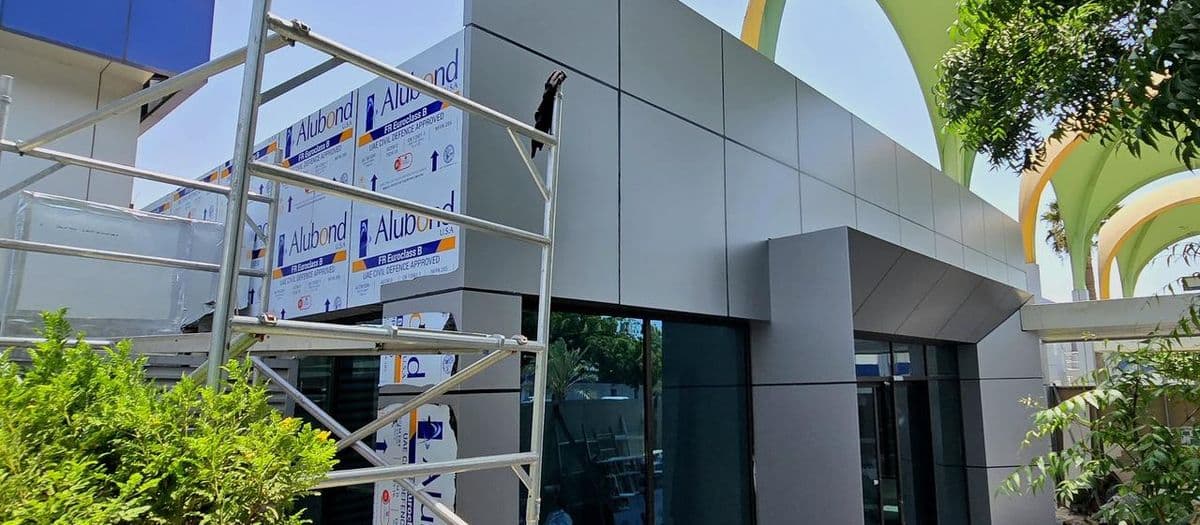
ACP cladding in the UAE typically costs AED 120–280 per square metre supply-and-install, depending on the panel core, finish and fixing system. Crucially, fire performance is regulated: standard PE-core panels are no longer approved for facades above ground floor, fire-retardant (FR) cores suit low- and mid-rise, and non-combustible A2 cores are required for high-rise buildings under UAE Civil Defence rules.
Walk through any commercial area in Dubai, Sharjah or Abu Dhabi and you'll see aluminium composite panel (ACP) cladding on thousands of buildings — offices, retail, warehouses, hospitals and apartments. It's lightweight, versatile and delivers a clean, modern facade. But in the UAE, ACP comes with one topic you cannot skip: fire rating.
What is ACP?
An ACP panel is two thin aluminium skins (usually 0.3–0.5mm) bonded to a core. The core is what determines both cost and — far more importantly — fire performance. That core is the whole story when it comes to UAE compliance.
Fire ratings: PE vs FR vs A2
This is the most important section in any UAE ACP discussion. Following major facade fires and tightened UAE Civil Defence regulations, the fire performance of cladding is strictly controlled:
- PE core (polyethylene) — a plastic core; cost-effective but flammable. No longer approved for facade use above ground floor on most commercial and residential buildings. Still used for internal signage and display panels.
- FR core (fire-retardant) — a mineral-filled core that limits flame spread. Approved for low-rise and some mid-rise applications, commonly for buildings under 15m.
- A2 core (non-combustible) — a mineral core with effectively no organic content; meets the highest standards and is required for buildings above 15m in most emirate jurisdictions.
ACP cost by core type
| Core type | Typical use | Cost (supply + install) |
|---|---|---|
| PE core | Internal / signage only | AED 70–110 / m² |
| FR core | Low & mid-rise facades | AED 120–180 / m² |
| A2 core | High-rise / fire-rated | AED 160–280 / m² |
Premium PVDF finishes and metallic or mirror colours usually carry a surcharge on top of these figures.
Fixing systems
ACP is installed on an aluminium sub-frame fixed to the building. The two main methods in the UAE are:
- Routed & returned cassette system — panels are CNC-routed and folded into rigid cassettes with return edges, then clipped or screwed to the sub-frame. The most common system for commercial facades — clean joints and easy replacement of individual panels.
- Direct adhesive (wet-fix) — panels bonded to a substrate for a flush surface, used mainly for lower-level shopfronts and signage.
Where ACP is used
Beyond building facades, ACP is widely used for soffits, canopies, column and beam covers, signage surrounds, parking shades and interior feature walls — anywhere you want a durable, lightweight, clean-lined finish.
Finishes
ACP comes in a huge range of finishes — solid colours, metallics, brushed, mirror and timber-look — typically with a PVDF (Kynar) coating on exterior-grade panels for weather and UV resistance. That flexibility is a big reason architects reach for it.
How to choose ACP for your project
- Start with the building height and use, then pick the minimum core that's compliant (FR or A2) — never specify PE for a facade.
- Confirm the panel brand and demand fire-rating certification.
- Choose the fixing system to suit the elevation — cassette for facades, wet-fix for flush signage.
- Use an installer who fabricates and fixes to a proper engineered sub-frame with weather detailing.
Working with Pillarstone
Pillarstone supplies and installs ACP and cladding systems — including fire-rated cores — across the UAE, from facades and soffits to signage and feature walls, fixed to an engineered sub-frame by our own crew. We also supply building materials to site. Tell us your project for a compliant, costed proposal.